
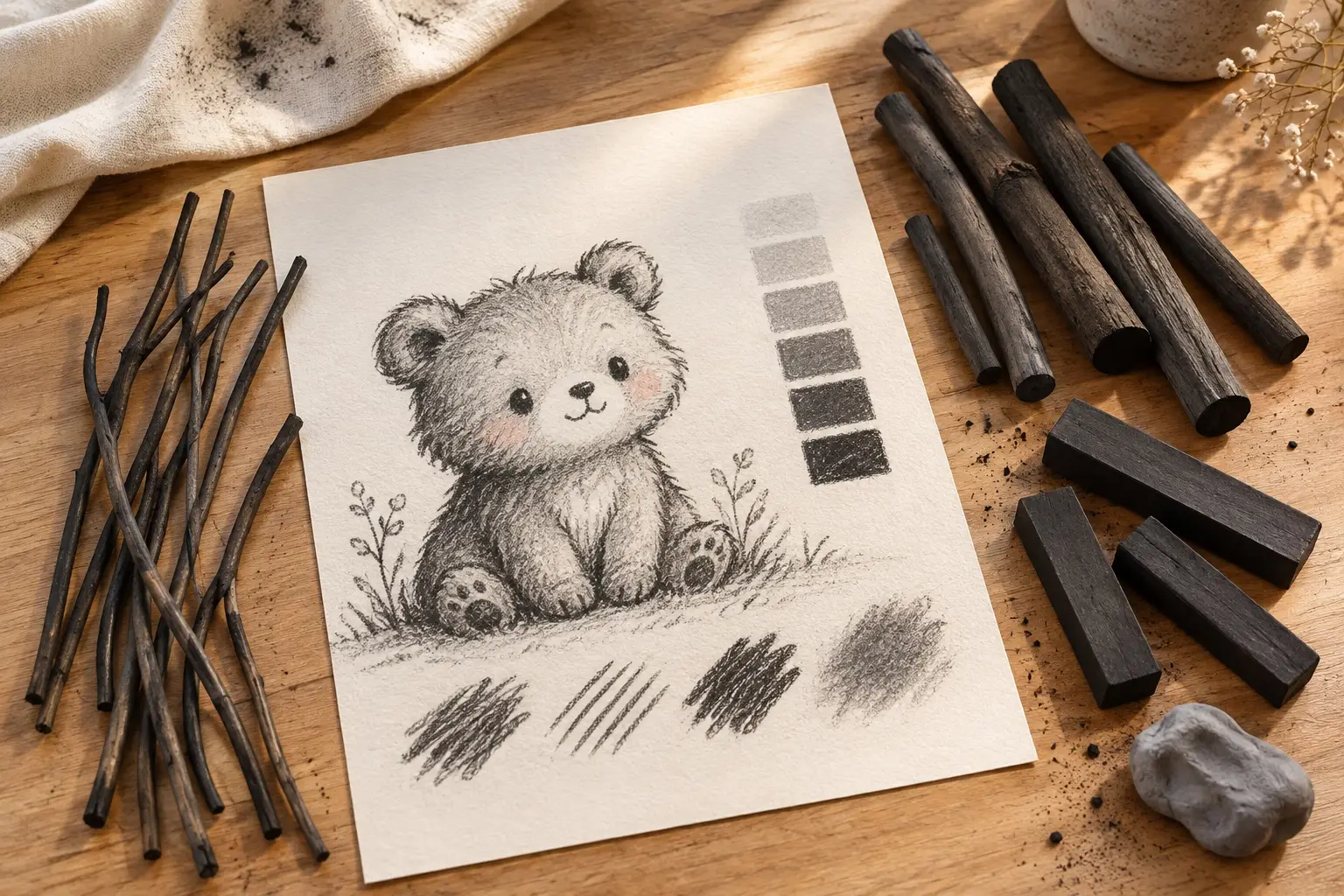
Choose by use case
If you wantBeginners and life-drawing students who want a balanced natural charcoal for gesture and value studies

Winsor & Newton Artist Vine Charcoal Sticks, Medium, Box of 12
Best starting vine charcoalResearch-based reviewA 12-stick medium vine box is the most adaptable entry here for light placement, loose lines and broad gray masses
If you wantGesture drawing and expressive first layers where smoky soft marks are more useful than firm edges

Winsor & Newton Artist Vine Charcoal Sticks, Soft, Box of 12
Best for loose, liftable marksResearch-based reviewTwelve soft vine sticks suit sweeping gesture, soft shadow mapping and drawings designed to be adjusted with a kneaded eraser
If you wantArtists who want one natural-charcoal box for both fine linear marks and wider side strokes

Winsor & Newton Artists' Willow Charcoal, Assorted, Box of 12
Best assorted natural widthsResearch-based reviewThe assorted 12-stick willow box trades exact uniformity for useful natural diameter variation
If you wantArtists who already know they want a soft compressed stick for dense passages and broad gestural strokes

Pacific Arc Compressed Charcoal Sticks, Soft, 12 Pack
Best for deep dark accentsResearch-based reviewTwelve matching soft compressed sticks create a more deliberate dark-value tool than the natural charcoal boxes in this guide
Product comparison
| Product | Best for | Watch out | Price & shop |
|---|---|---|---|
| Winsor & Newton Artist Vine Charcoal Sticks, Medium, Box of 12 (opens Amazon in a new tab) Best starting vine charcoalResearch-based review | Beginners and life-drawing students who want a balanced natural charcoal for gesture and value studies | Natural vine charcoal is fragile and its dark gray mark will not replace compressed charcoal when the drawing needs a dense black accent | |
| Winsor & Newton Artist Vine Charcoal Sticks, Soft, Box of 12 (opens Amazon in a new tab) Best for loose, liftable marksResearch-based review | Gesture drawing and expressive first layers where smoky soft marks are more useful than firm edges | A soft vine stick can feel too vague for small controlled contours, and it will not create the deepest compressed-charcoal black | |
| Winsor & Newton Artists' Willow Charcoal, Assorted, Box of 12 (opens Amazon in a new tab) Best assorted natural widthsResearch-based review | Artists who want one natural-charcoal box for both fine linear marks and wider side strokes | Natural pieces are not manufactured to identical dimensions, so the exact diameter mix and wear will be less predictable than a rectangular compressed set | |
| Pacific Arc Compressed Charcoal Sticks, Soft, 12 Pack (opens Amazon in a new tab) Best for deep dark accentsResearch-based review | Artists who already know they want a soft compressed stick for dense passages and broad gestural strokes | A 12-pack of one soft compressed grade is a poor first purchase if you still need pale construction, easy erasing or a mixed firmness range |
How we researched this guide
- Product listings checked
- Hands-on testing
- None of the 4 picks — all are research-based
- Labels explained
- How we test and label products
This is a research-based buying guide, not a hands-on darkness, smoothness, breakage, dust, blendability, erasability or fixative test. On October 8, 2026, we opened the exact Amazon.com page for every recommendation in a US delivery context, confirmed its ASIN, selected grade and pack size, an active add-to-cart purchase path, and a matching direct Amazon CDN main image. We cross-checked stick type, count, grade and intended marks against current manufacturer pages from Winsor & Newton and Pacific Arc. KawaiiToons has not used these sticks, measured their diameters, compared how black they draw, tested how cleanly they erase or evaluated breakage in transit. The picks are organized by documented format and use case, not temporary prices, star ratings or invented first-hand experience.
Testing status by pick
- Winsor & Newton Artist Vine Charcoal Sticks, Medium, Box of 12Research-based review
- Winsor & Newton Artist Vine Charcoal Sticks, Soft, Box of 12Research-based review
- Winsor & Newton Artists' Willow Charcoal, Assorted, Box of 12Research-based review
- Pacific Arc Compressed Charcoal Sticks, Soft, 12 PackResearch-based review
Product details and drawbacks
Winsor & Newton Artist Vine Charcoal Sticks, Medium, Box of 12 (opens Amazon in a new tab)
A 12-stick medium vine box is the most adaptable entry here for light placement, loose lines and broad gray masses

Why it fits this guide
Medium vine charcoal sits in the useful middle of this comparison. The exact Amazon listing identifies a box of 12 medium sticks, while Winsor & Newton describes this grade as a general-purpose dark gray charcoal. That makes it the clearest first purchase for someone who wants to establish a pose, map a shadow and lift corrections without beginning with the denser commitment of a soft compressed block.
Honest drawback
Natural vine charcoal is fragile and its dark gray mark will not replace compressed charcoal when the drawing needs a dense black accent
Specifications
- Exact Amazon ASIN B00251CL1S showed an active add-to-cart and buy-now purchase path on October 8, 2026
- Selected Amazon variant was Medium, Box of 12
- Winsor & Newton identifies the set as 12 medium vine charcoal sticks and describes medium as a general-purpose dark gray grade
Best forBeginners and life-drawing students who want a balanced natural charcoal for gesture and value studies
Pros
- Medium grade is easier to position as an all-purpose starting point than a specialized extra-soft stick
- Natural vine format supports light, broad and easily adjusted early marks
- Twelve-stick box provides replacements for a fragile consumable medium
Cons
- Less densely black than compressed charcoal
- Slender natural sticks need protective storage and gentle pressure
Winsor & Newton Artist Vine Charcoal Sticks, Soft, Box of 12 (opens Amazon in a new tab)
Twelve soft vine sticks suit sweeping gesture, soft shadow mapping and drawings designed to be adjusted with a kneaded eraser

Why it fits this guide
The soft variant is a deliberate step away from firm detail. Its exact Amazon page identifies a box of 12 soft sticks, and the current Winsor & Newton range separates soft from medium, hard and extra-soft vine grades. Choose it when you want the first layer to stay loose: long arcs through a pose, lightly massed shadows and edges that can be softened or lifted before a denser tool enters the drawing.
Honest drawback
A soft vine stick can feel too vague for small controlled contours, and it will not create the deepest compressed-charcoal black
Specifications
- Exact Amazon ASIN B0021IK626 was in stock with an active add-to-cart purchase path on October 8, 2026
- Selected Amazon variant was Soft, Box of 12
- Winsor & Newton lists soft as a distinct grade in its current 12-stick Artist Vine Charcoal range
Best forGesture drawing and expressive first layers where smoky soft marks are more useful than firm edges
Pros
- Purposeful soft grade for quick gesture and smoky value placement
- Natural charcoal is a useful companion to denser compressed sticks
- Twelve matching sticks simplify replenishment for repeated drawing sessions
Cons
- Soft marks are not the best choice for crisp tiny details
- Fragile sticks and loose dust make travel less convenient
Winsor & Newton Artists' Willow Charcoal, Assorted, Box of 12 (opens Amazon in a new tab)
The assorted 12-stick willow box trades exact uniformity for useful natural diameter variation

Why it fits this guide
Width changes how a charcoal stick meets paper. A thin piece can place a small contour or hatch, while a thicker piece gives more side area for a broad passage. Winsor & Newton's exact Amazon product is an assorted box of 12, and the manufacturer identifies the pack as 12 assorted willow charcoal sticks. It is the most direct pick here for artists who value that range of natural mark widths in one box.
Honest drawback
Natural pieces are not manufactured to identical dimensions, so the exact diameter mix and wear will be less predictable than a rectangular compressed set
Specifications
- Exact Amazon ASIN B0049B38CS showed an active add-to-cart and buy-now purchase path on October 8, 2026
- Exact listing title identifies assorted willow charcoal in a box of 12
- Winsor & Newton lists 12 assorted charcoal sticks and describes its willow as correctly baked for consistent intensity
Best forArtists who want one natural-charcoal box for both fine linear marks and wider side strokes
Pros
- Assorted natural widths expand line and side-stroke choices
- Willow provides a different natural-charcoal option from the two vine grades
- Box of 12 is useful for a breakable, consumable medium
Cons
- Exact natural diameters can vary
- Not the controlled choice for identical repeated blocks or a labeled hardness range
Pacific Arc Compressed Charcoal Sticks, Soft, 12 Pack (opens Amazon in a new tab)
Twelve matching soft compressed sticks create a more deliberate dark-value tool than the natural charcoal boxes in this guide

Why it fits this guide
Pacific Arc documents the CCS-S as a 12-stick soft open-stock box and describes compressed charcoal as suited to dense dark lines and broad gestural strokes. That makes this the finishing and emphasis pick: use natural charcoal to place and adjust the drawing, then reserve a compressed edge or side for the dark shapes that anchor it. The bulk single grade also suits artists who already know soft is the grade they consume most often.
Honest drawback
A 12-pack of one soft compressed grade is a poor first purchase if you still need pale construction, easy erasing or a mixed firmness range
Specifications
- Exact Amazon ASIN B08L8JKP72 was in stock with an active add-to-cart purchase path on October 8, 2026
- Exact Amazon listing identifies 12 soft compressed charcoal sticks
- Pacific Arc model CCS-S is documented as a 12-stick soft open-stock box
Best forArtists who already know they want a soft compressed stick for dense passages and broad gestural strokes
Pros
- Compressed format is designed for dense lines and broad gestural strokes
- Rectangular edges provide several contact widths without relying on a natural twig diameter
- Twelve matching sticks make sense for artists who already prefer soft compressed charcoal
Cons
- Less forgiving for pale planning and repeated lifting
- Single soft grade does not teach the differences among hard, medium and soft compressed charcoal
Corrections
Spotted an error or outdated detail? Read how we handle corrections.
Related guides

Best Charcoal Pencils for Drawing
The best charcoal pencils for drawing and shading, compared for beginners, portraits, soft gradients, white highlights, woodless coverage and value.
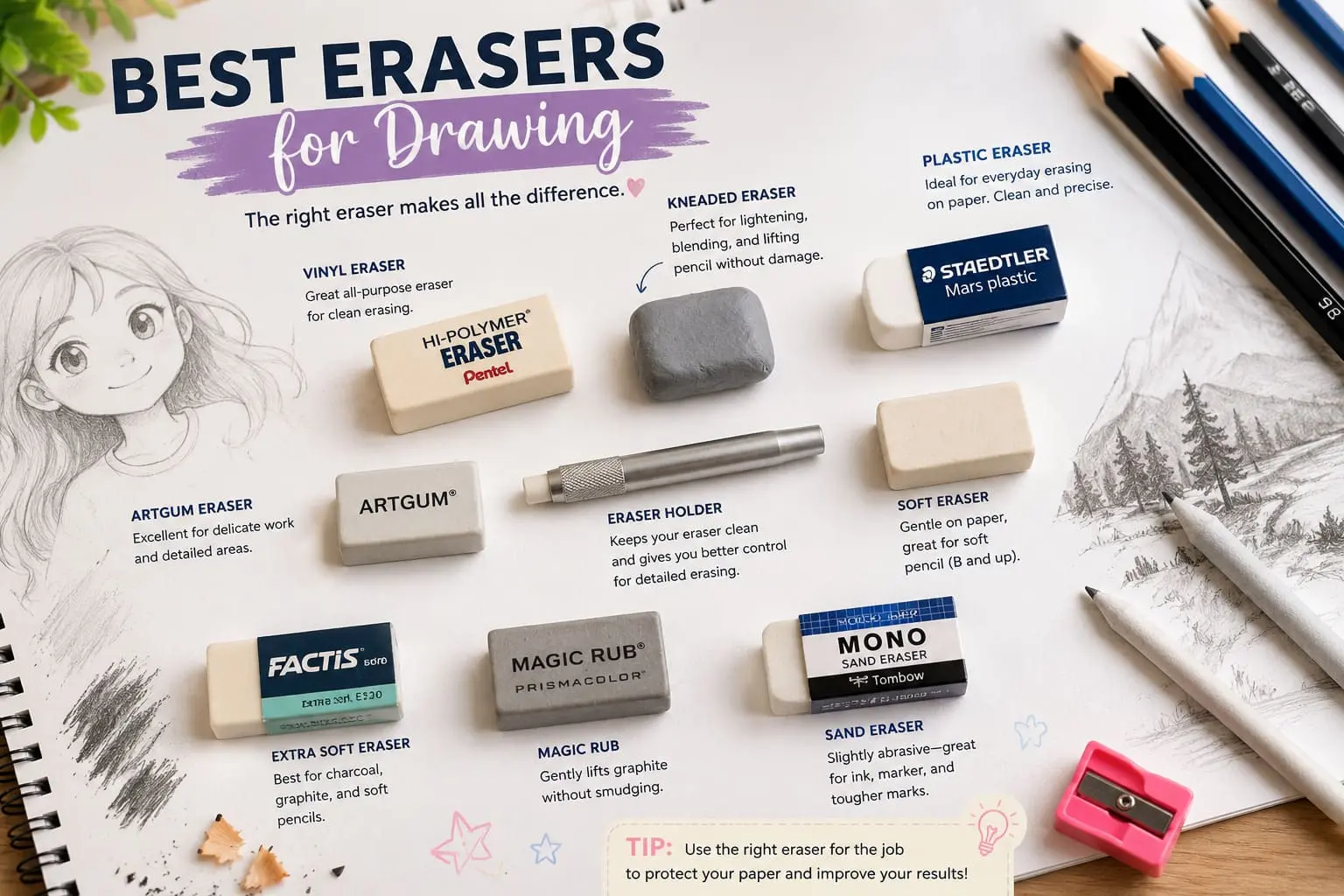
Best Erasers for Drawing
The best erasers for drawing, from kneaded and vinyl blocks to precision and electric picks for graphite, charcoal, highlights, and detail work.
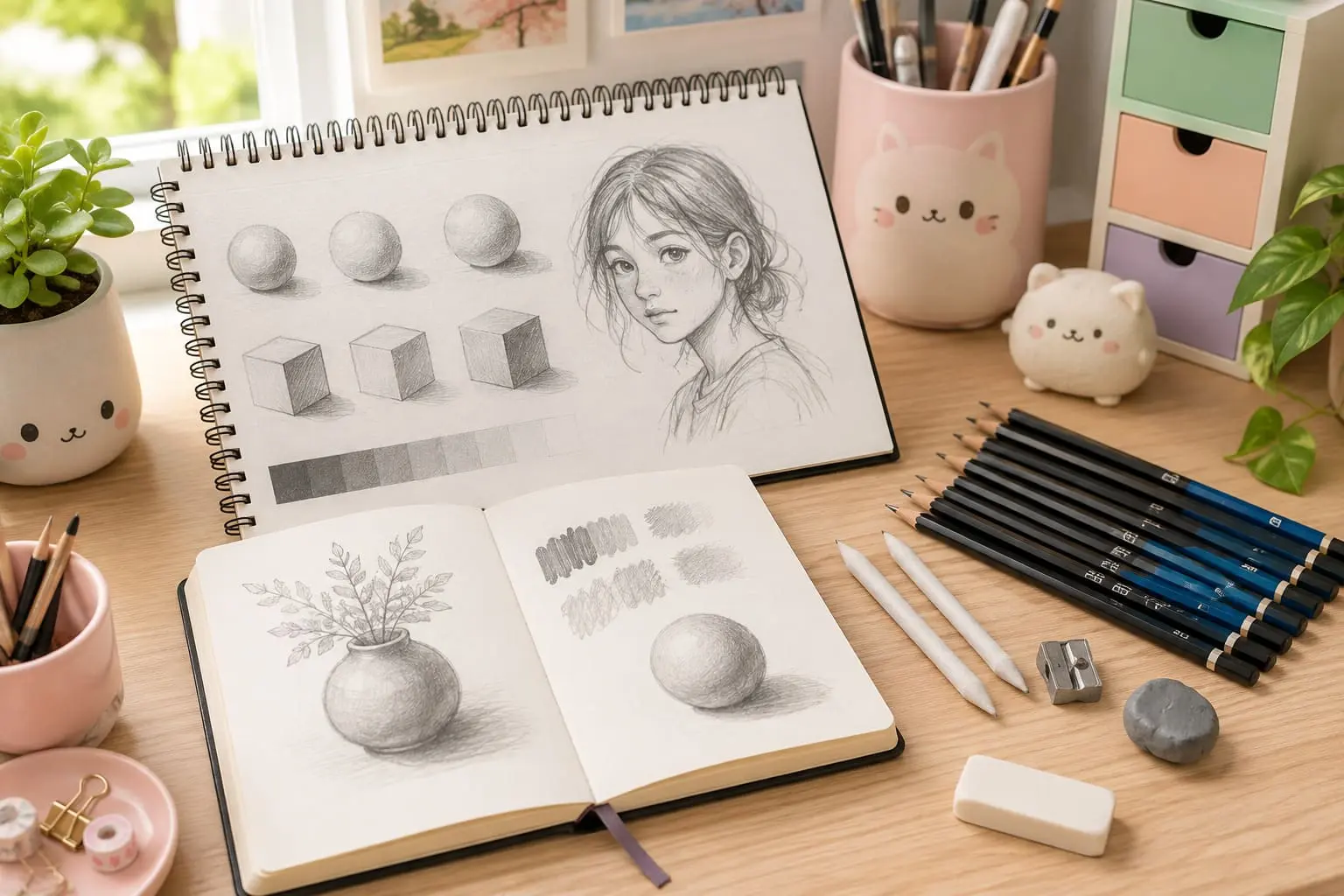
Best Sketchbooks for Pencil Drawing
Compare 10 of the best sketchbooks for pencil drawing, from budget spiral pads to premium heavyweight and toned paper picks for shading.
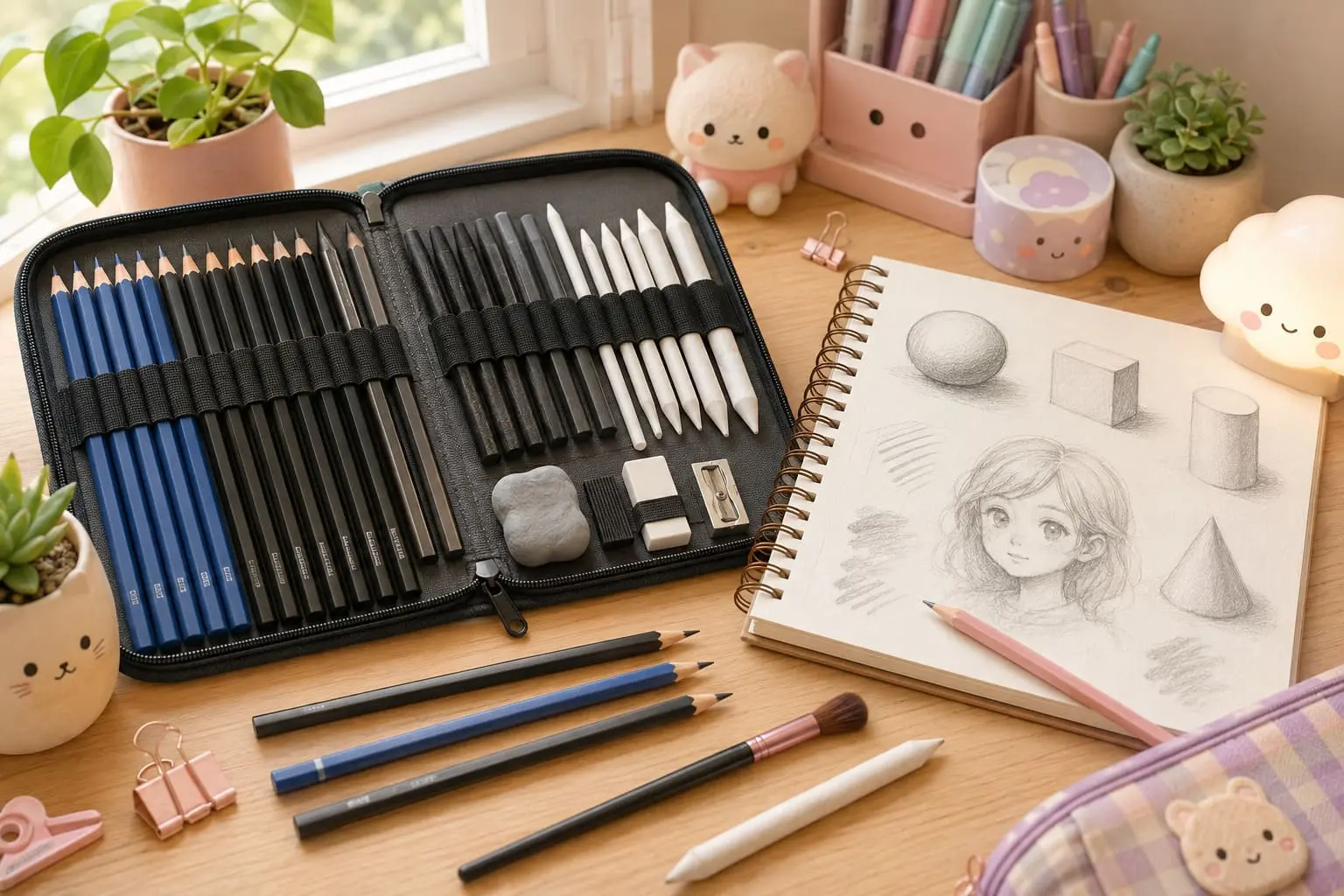
Best Drawing Kits for Beginners: 10 Starter Sets That Are Actually Useful
The best drawing kits for beginners, with useful graphite, charcoal, blending and sketching tools instead of filler. Compare 10 practical starter sets.


