
Choose by use case
If you wantPaper collage and journal decoration

Scrap't 24 Days of Scrapbooking Advent Calendar 2026
For journal decorationResearch-based reviewA paper-craft assortment rather than a general fan gift.
If you wantPainting and creative holiday projects

MEEDEN 24-Day Christmas Art Advent Calendar 2026
For varied art activitiesResearch-based reviewMixed media and craft materials for someone who enjoys trying different activities.
If you wantA Naruto-themed desk and gift countdown

Cinereplicas Naruto Rasengan Advent Calendar 2026
For a Naruto fanResearch-based reviewChoose for the recipient's fandom, with stationery as part of the mix.
Product comparison
| Product | Best for | Watch out | Price & shop |
|---|---|---|---|
| Scrap't 24 Days of Scrapbooking Advent Calendar 2026 (opens Amazon in a new tab) For journal decorationResearch-based review | Scrapbookers and collage journalers | Decorations may duplicate an existing stash. Do not assume it includes a journal or a complete project for every day; inspect the contents before choosing it as a first kit. | |
| MEEDEN 24-Day Christmas Art Advent Calendar 2026 (opens Amazon in a new tab) For varied art activitiesResearch-based review | Adults who enjoy painting and crafts | An assortment gives less control than a set chosen for one medium. Online guidance requires a device; we have not checked every tutorial or confirmed that each daily box contains a self-contained project. | |
| Cinereplicas Naruto Rasengan Advent Calendar 2026 (opens Amazon in a new tab) For a Naruto fanResearch-based review | Fans who want stationery and small accessories | This is not 24 stationery supplies or an art course. The maker's own store showed unavailable when researched, while the exact Amazon.com listing had a purchase offer; check the seller and edition carefully. |
How we researched this guide
- Research date
- Hands-on testing
- None of the 3 picks — all are research-based
- Labels explained
- How we test and label products
This is a research-based shortlist, not a hands-on ranking. On October 17, 2026, we compared manufacturer descriptions with exact Amazon.com detail pages for the 2026 editions. Each selected listing had an active purchase offer fulfilled by Amazon. We checked brand, countdown format, stated contents, intended use and matching product imagery. Delivery estimates depend on the destination; the date shown for one address is not a US-wide arrival promise. We did not open the calendars, inspect every compartment, test the supplies or verify claimed retail-value totals. We excluded older editions and unverified generic assortments rather than fill a product quota.
What we compared
- A documented 2026 edition with an exact Amazon.com purchase offer and matching direct product image.
- A clear distinction between journal decoration, art materials and fan merchandise.
- Count daily compartments separately from the number of pieces inside.
- Use manufacturer and listing contents without inventing a day-by-day reveal.
- Keep delivery, child suitability and missing essentials visible in the buying decision.
What we did not test
- No physical unboxing, ink or paint testing, packaging inspection or assessment of individual supply quality.
- No independent valuation, delivery guarantee or blanket child-safety certification.
Testing status by pick
- Scrap't 24 Days of Scrapbooking Advent Calendar 2026Research-based review
- MEEDEN 24-Day Christmas Art Advent Calendar 2026Research-based review
- Cinereplicas Naruto Rasengan Advent Calendar 2026Research-based review
Sources
Product details and drawbacks
Scrap't 24 Days of Scrapbooking Advent Calendar 2026 (opens Amazon in a new tab)
A paper-craft countdown with 24 individually numbered boxes.

Why it fits this guide
Scrap't describes stickers, papers, washi, pens, stamps, ribbons, adhesives and tools. The mix suits someone who enjoys arranging and decorating pages. The maker and Amazon listing identify the same scrapbooking format.
Honest drawback
Decorations may duplicate an existing stash. Do not assume it includes a journal or a complete project for every day; inspect the contents before choosing it as a first kit.
Specifications
- 2026 Amazon listing
- 24 individually boxed days
- G22023-ADV
- Paper-craft supplies and embellishments
Best forScrapbookers and collage journalers
Pros
- Focused on page decoration
- Separate daily boxes
Cons
- Possible supply duplication
- Not a guaranteed complete journaling setup
MEEDEN 24-Day Christmas Art Advent Calendar 2026 (opens Amazon in a new tab)
An art-and-craft assortment rather than a stationery-only calendar.

Why it fits this guide
MEEDEN documents painting media, drawing tools, brushes, paper and craft materials, plus QR access to online guidance. Its 24 separately packed gifts make this a candidate for someone open to different kinds of making.
Honest drawback
An assortment gives less control than a set chosen for one medium. Online guidance requires a device; we have not checked every tutorial or confirmed that each daily box contains a self-contained project.
Specifications
- 2026 edition, BM-0105
- 24 individually packed gifts
- Double-door outer gift box
- QR-linked online tutorial access
Best forAdults who enjoy painting and crafts
Pros
- Several creative formats
- Guidance available online
Cons
- Mixed supplies may not match a specialist
- Tutorial access needs a device
Cinereplicas Naruto Rasengan Advent Calendar 2026 (opens Amazon in a new tab)
A licensed fan countdown with a Rasengan spinner in its cover.

Why it fits this guide
Cinereplicas confirms the 2026 edition, 24 compartments and a mix of stationery, accessories and collectibles. It is a more personal choice when Naruto is the reason the recipient will enjoy opening it.
Honest drawback
This is not 24 stationery supplies or an art course. The maker's own store showed unavailable when researched, while the exact Amazon.com listing had a purchase offer; check the seller and edition carefully.
Specifications
- 2026 Rasengan edition
- 24 themed gifts
- Official Naruto license
- Spinner built into the cover
Best forFans who want stationery and small accessories
Pros
- Recognizable fan theme
- Mix of practical and collectible gifts
Cons
- Includes non-stationery items
- Poor fit without an interest in Naruto
Corrections
Spotted an error or outdated detail? Read how we handle corrections.
Related guides
Best Gifts for Artists: Thoughtful Art Supply Gift Ideas
Gift ideas for artists who draw, color, paint or journal, sorted by budget and skill level, with tips for choosing supplies they will actually use.
Best Stickers for Journaling: 10 Cute Sets for Decorating Your Pages
Find the best stickers for journaling, from kawaii animals and washi paper to florals, PET stickers and vintage collage sets for cute journal pages.
Best Washi Tape for Journaling: 10 Cute & Versatile Sets
The best washi tape for journaling, from kawaii animals and pastel florals to grid, vintage, skinny, and foil sets. Compare roll count, width, length, and style.
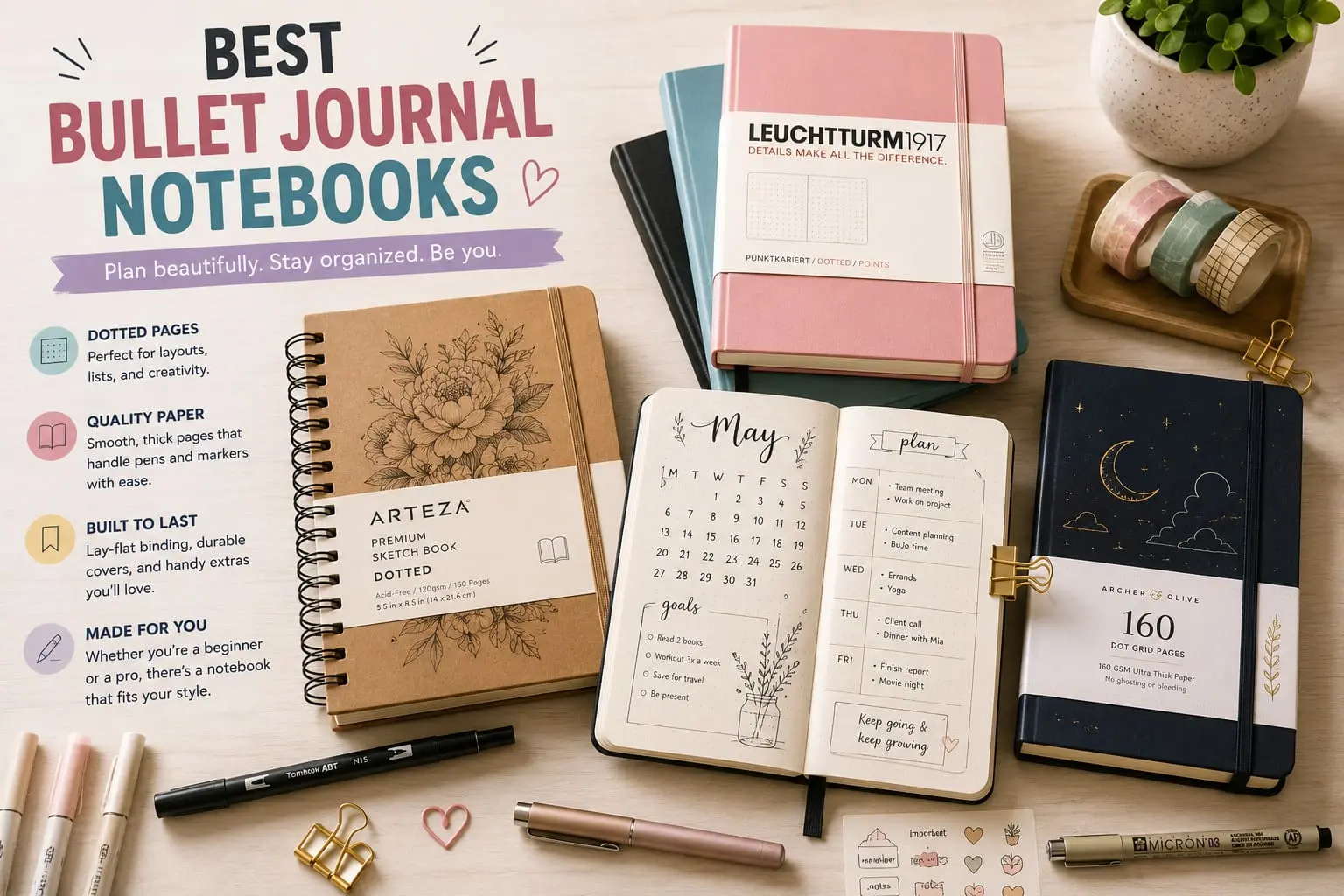
Best Bullet Journal Notebooks: 10 Picks for Beginners & Creative Planning
The best bullet journal notebooks for beginners and creative planning. Compare paper weight, page count, dot grids, binding, and setup features.


