
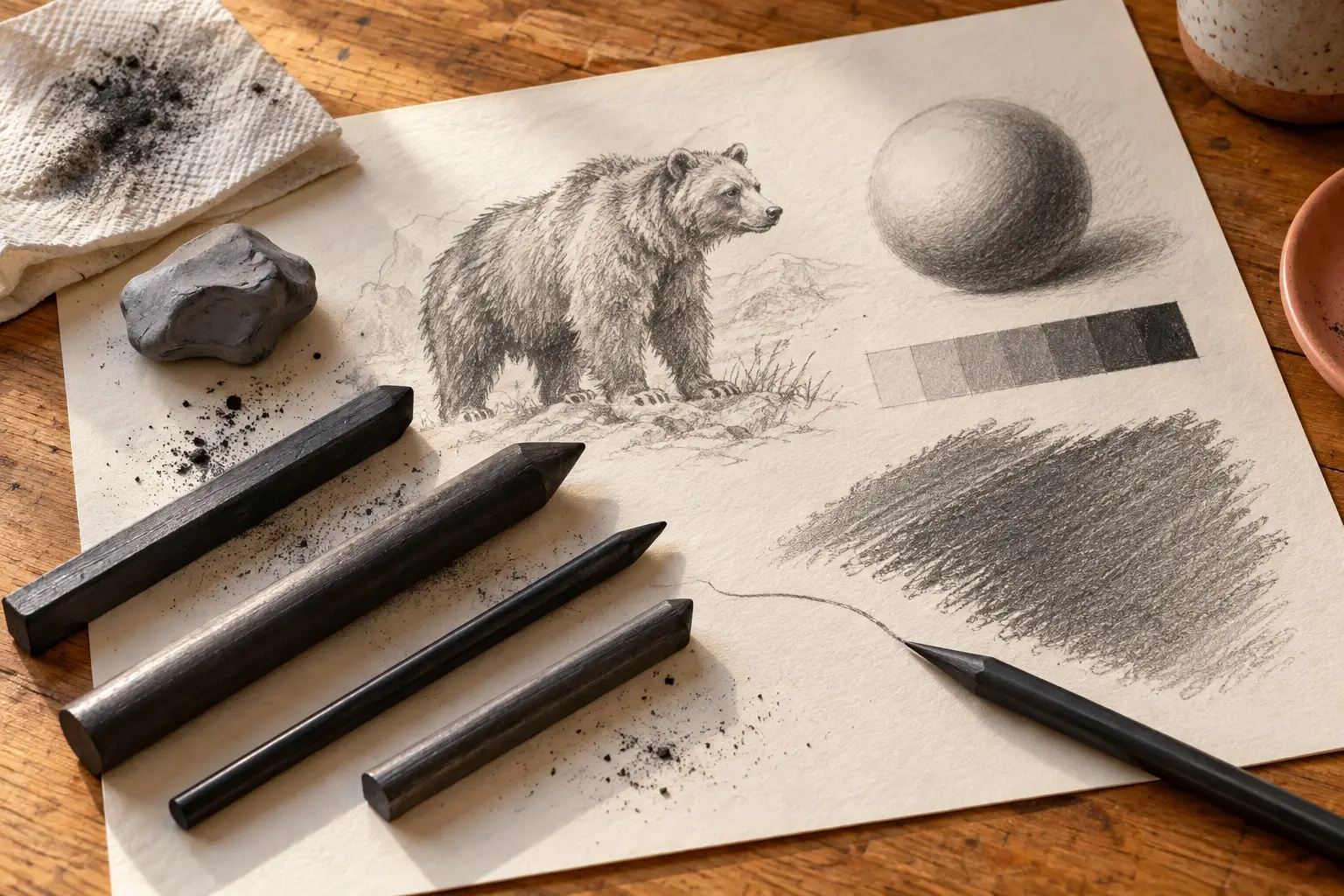
Choose by use case
If you wantArtists who want a practical range from HB through 9B without wood barrels
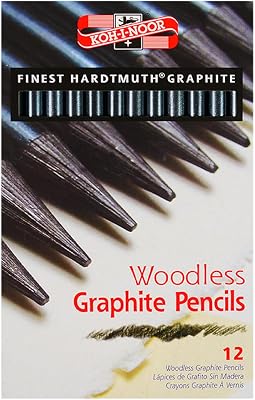
Koh-I-Noor Progresso Woodless Graphite Pencil Set, 12 Pencils
Best overall woodless setResearch-based reviewTwelve lacquered solid-graphite pencils provide two each of six documented grades for lines, side shading and dark accents
If you wantArtists who want immediate broad 2B and 4B marks rather than a large grade assortment

Koh-I-Noor Jumbo Graphite Stick Set, 2B and 4B
Best simple stick pairResearch-based reviewTwo large sticks in 2B and 4B give a focused mid-to-soft graphite pairing for sketching and value blocking
If you wantArtists, classes or studios that already know they want repeated 4B compressed graphite sticks

General's Kimberly Compressed Graphite Sticks, 4B, Pack of 12
Best single-grade bulk packResearch-based reviewA 12-stick pack of the same documented 4B grade is the straightforward replenishment option for repeated broad graphite work
If you wantExpressive sketchers who want large graphite blocks that can move from dry drawing into a brush-and-water stage

Derwent Graphite XL Blocks, Set of 6
Best water-soluble blocksResearch-based reviewSix 60 mm water-soluble Graphite XL blocks make the clearest choice here for large gestural marks and activated washes
Product comparison
| Product | Best for | Watch out | Price & shop |
|---|---|---|---|
| Koh-I-Noor Progresso Woodless Graphite Pencil Set, 12 Pencils (opens Amazon in a new tab) Best overall woodless setResearch-based review | Artists who want a practical range from HB through 9B without wood barrels | Solid graphite can snap if dropped or crushed, and the set has no hard H grades for pale technical construction lines | |
| Koh-I-Noor Jumbo Graphite Stick Set, 2B and 4B (opens Amazon in a new tab) Best simple stick pairResearch-based review | Artists who want immediate broad 2B and 4B marks rather than a large grade assortment | The two-piece set cannot supply a sharp fine point or a complete tonal range, so it works best beside a regular drawing pencil | Budget-friendlyCheck price on Amazon (opens Amazon in a new tab) |
| General's Kimberly Compressed Graphite Sticks, 4B, Pack of 12 (opens Amazon in a new tab) Best single-grade bulk packResearch-based review | Artists, classes or studios that already know they want repeated 4B compressed graphite sticks | Every stick is 4B, so this pack needs a lighter pencil and perhaps a darker tool to cover a full drawing range | Budget-friendlyCheck price on Amazon (opens Amazon in a new tab) |
| Derwent Graphite XL Blocks, Set of 6 (opens Amazon in a new tab) Best water-soluble blocksResearch-based review | Expressive sketchers who want large graphite blocks that can move from dry drawing into a brush-and-water stage | These large blocks are not a precision-pencil replacement, and water activation introduces paper choice, drying time and less predictable edges |
How we researched this guide
- Product listings checked
- Hands-on testing
- None of the 4 picks — all are research-based
- Labels explained
- How we test and label products
This is a research-based buying guide, not a hands-on smoothness, breakage, blendability, lightfastness or durability test. On October 2, 2026, we opened the exact Amazon.com page for every recommendation in a US delivery context, confirmed its ASIN, a current in-stock or limited-stock purchase path with add-to-cart control, and a matching direct Amazon CDN main image. We cross-checked grade ranges, counts, block format and water solubility against current manufacturer or distributor information. KawaiiToons has not measured core diameter, sharpened any stick, compared blackness, pressure response, dust, smudging, erasing or wash behavior. Rankings reflect the documented format and use case, not ratings, temporary prices or invented first-hand experience.
Testing status by pick
- Koh-I-Noor Progresso Woodless Graphite Pencil Set, 12 PencilsResearch-based review
- Koh-I-Noor Jumbo Graphite Stick Set, 2B and 4BResearch-based review
- General's Kimberly Compressed Graphite Sticks, 4B, Pack of 12Research-based review
- Derwent Graphite XL Blocks, Set of 6Research-based review
Product details and drawbacks
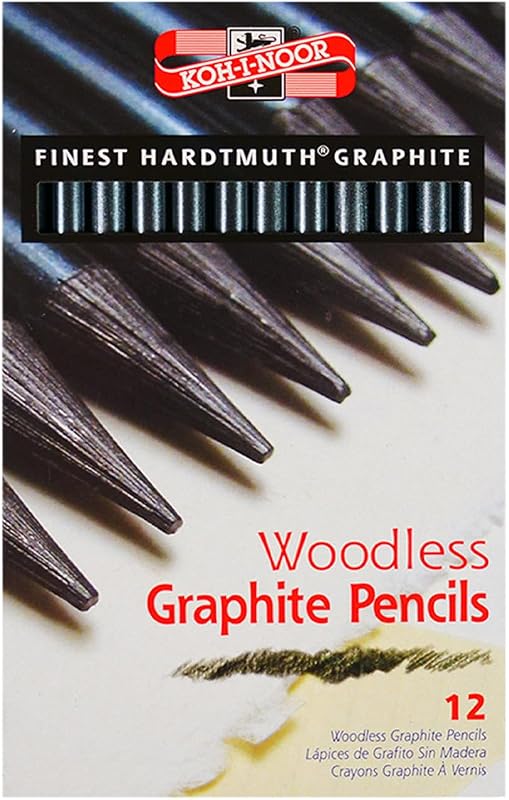
Koh-I-Noor Progresso Woodless Graphite Pencil Set, 12 Pencils (opens Amazon in a new tab)
Twelve lacquered solid-graphite pencils provide two each of six documented grades for lines, side shading and dark accents
Why it fits this guide
The Progresso set offers the most useful starting range in this small comparison. Its exact FA8911.12 listing contains two pencils each in HB, 2B, 4B, 6B, 8B and 9B. That lets an artist reserve one grade for a sharp point while using the duplicate for broad side work, or simply replace the grades that wear first. The woodless body exposes more graphite than a conventional pencil, but it still sharpens to a point for contours and small value shapes.
Honest drawback
Solid graphite can snap if dropped or crushed, and the set has no hard H grades for pale technical construction lines
Specifications
- Exact Amazon ASIN B008UGEL56 was in stock with add-to-cart and buy-now controls on October 2, 2026
- Exact model FA8911.12 contains 12 woodless graphite pencils
- Amazon product information identifies HB, 2B, 4B, 6B, 8B and 9B, with two pencils per grade
Best forArtists who want a practical range from HB through 9B without wood barrels
Pros
- Mixed range runs from HB to very soft 9B
- Duplicate pencils make the set more practical than a one-of-each range
- Pencil shape can be sharpened for detail or tipped sideways for broad marks
Cons
- Graphite body needs gentler storage than a wood-cased pencil
- No H grades for the lightest construction drawing
Koh-I-Noor Jumbo Graphite Stick Set, 2B and 4B (opens Amazon in a new tab)
Two large sticks in 2B and 4B give a focused mid-to-soft graphite pairing for sketching and value blocking

Why it fits this guide
A small pairing can be more useful than a crowded kit when the goal is loose sketching. The exact FA8971.2BC set supplies a 2B and a 4B Jumbo Graphite Stick, letting an artist separate a middle value from a darker value without deciding among six grades. The large exposed graphite surface is designed for a different kind of mark than a sharpened pencil: fast coverage, wide edges and direct contact with paper.
Honest drawback
The two-piece set cannot supply a sharp fine point or a complete tonal range, so it works best beside a regular drawing pencil
Specifications
- Exact Amazon ASIN B078CYW1M8 showed limited in-stock availability with add-to-cart control on October 2, 2026
- Exact model FA8971.2BC contains two Jumbo Graphite Sticks
- Amazon identifies the supplied grades as 2B and 4B
Best forArtists who want immediate broad 2B and 4B marks rather than a large grade assortment
Pros
- Simple two-grade setup avoids unnecessary duplicates
- Broad stick shape supports large dry graphite marks
- 2B and 4B create a usable middle-to-dark pairing
Cons
- No hard grade or fine point
- Requires a separate sharpening or sanding approach for detail
General's Kimberly Compressed Graphite Sticks, 4B, Pack of 12 (opens Amazon in a new tab)
A 12-stick pack of the same documented 4B grade is the straightforward replenishment option for repeated broad graphite work

Why it fits this guide
The Kimberly pack is not a starter range, which is exactly why it earns a different place in this guide. The exact 974-4B listing provides twelve identical compressed graphite sticks. For an artist who has already settled on 4B as a useful mid-soft value, a single-grade pack avoids accumulating unwanted hard or extra-soft tools. It also helps a classroom or shared studio keep the same grade at several workstations.
Honest drawback
Every stick is 4B, so this pack needs a lighter pencil and perhaps a darker tool to cover a full drawing range
Specifications
- Exact Amazon ASIN B00S3TSKE8 was in stock with add-to-cart and buy-now controls on October 2, 2026
- Exact General's model 974-4B is a pack of 12 compressed graphite sticks
- Amazon identifies the listed hardness as 4B
Best forArtists, classes or studios that already know they want repeated 4B compressed graphite sticks
Pros
- Twelve matching sticks simplify replenishment
- One known grade is useful for a repeated exercise or class setup
- Compressed stick format favors broad marks over repeated sharpening
Cons
- No grade variety
- A fragile dust-producing format is less convenient for travel
Derwent Graphite XL Blocks, Set of 6 (opens Amazon in a new tab)
Six 60 mm water-soluble Graphite XL blocks make the clearest choice here for large gestural marks and activated washes

Why it fits this guide
Derwent Graphite XL belongs in a different workflow from the pencil-like options. The exact 2306195 set contains six 60 mm blocks, and the current Amazon listing identifies them as water-soluble. That opens a deliberate second stage: make a dry graphite mark, then use a damp brush where a wash or softened edge is wanted. The block size also makes it easier to cover a larger shape quickly than with a sharpened pencil tip.
Honest drawback
These large blocks are not a precision-pencil replacement, and water activation introduces paper choice, drying time and less predictable edges
Specifications
- Exact Amazon ASIN B0CC6H8F5W showed limited in-stock availability with add-to-cart control on October 2, 2026
- Exact Derwent model 2306195 is a tin of six Graphite XL Blocks
- Amazon identifies the blocks as 60 mm and water-soluble
Best forExpressive sketchers who want large graphite blocks that can move from dry drawing into a brush-and-water stage
Pros
- Large 60 mm block format supports expressive coverage
- Water solubility adds an optional wash technique
- Tin helps contain the block set between sessions
Cons
- Too broad for controlled tiny contours
- Water activation requires suitable paper and a drying stage
Corrections
Spotted an error or outdated detail? Read how we handle corrections.
Related guides
Best Drawing Pencils for Beginners
Compare the best drawing pencils for beginners for sketching and shading, including graphite grades, starter tools, accessories, and practical trade-offs.
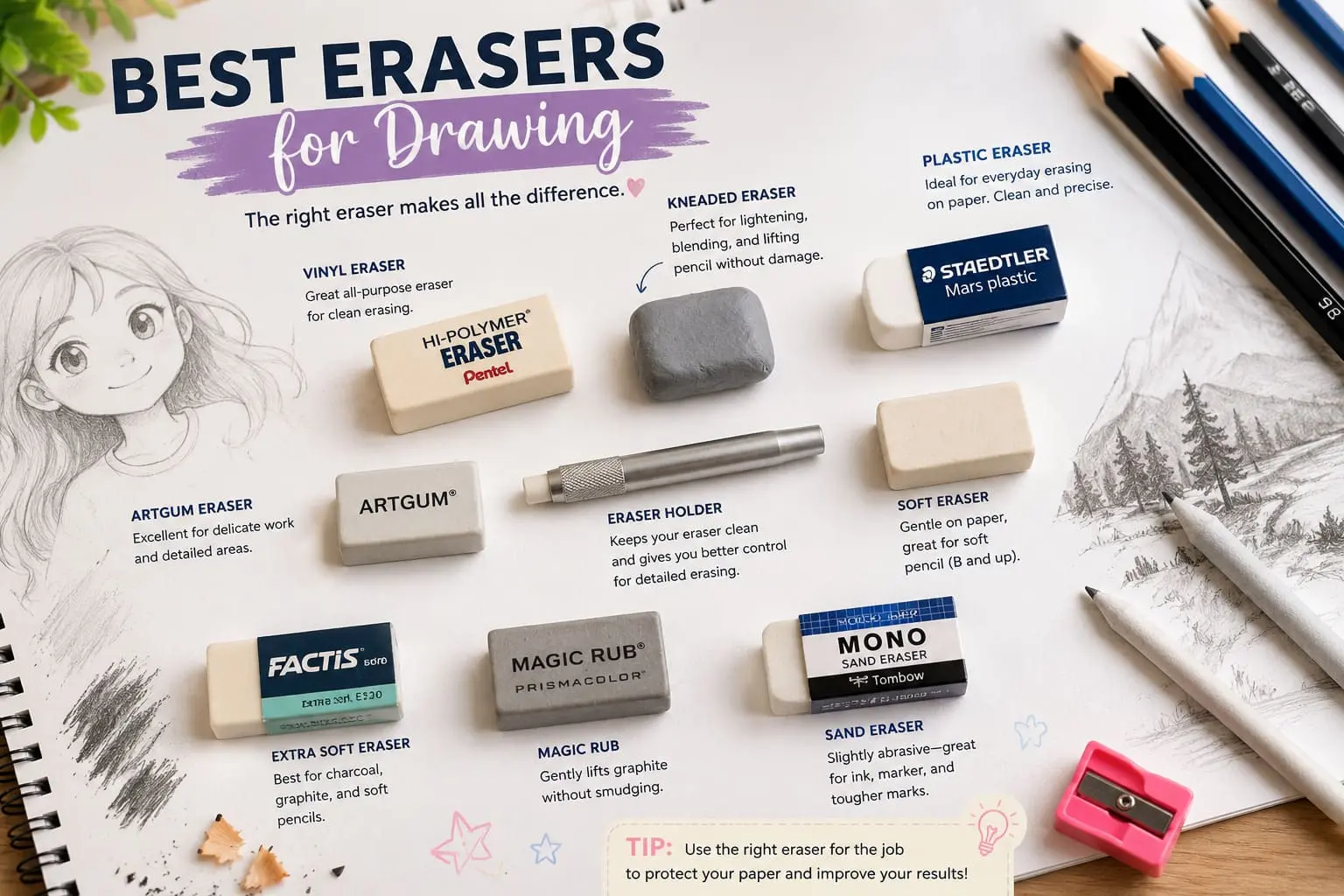
Best Erasers for Drawing
The best erasers for drawing, from kneaded and vinyl blocks to precision and electric picks for graphite, charcoal, highlights, and detail work.
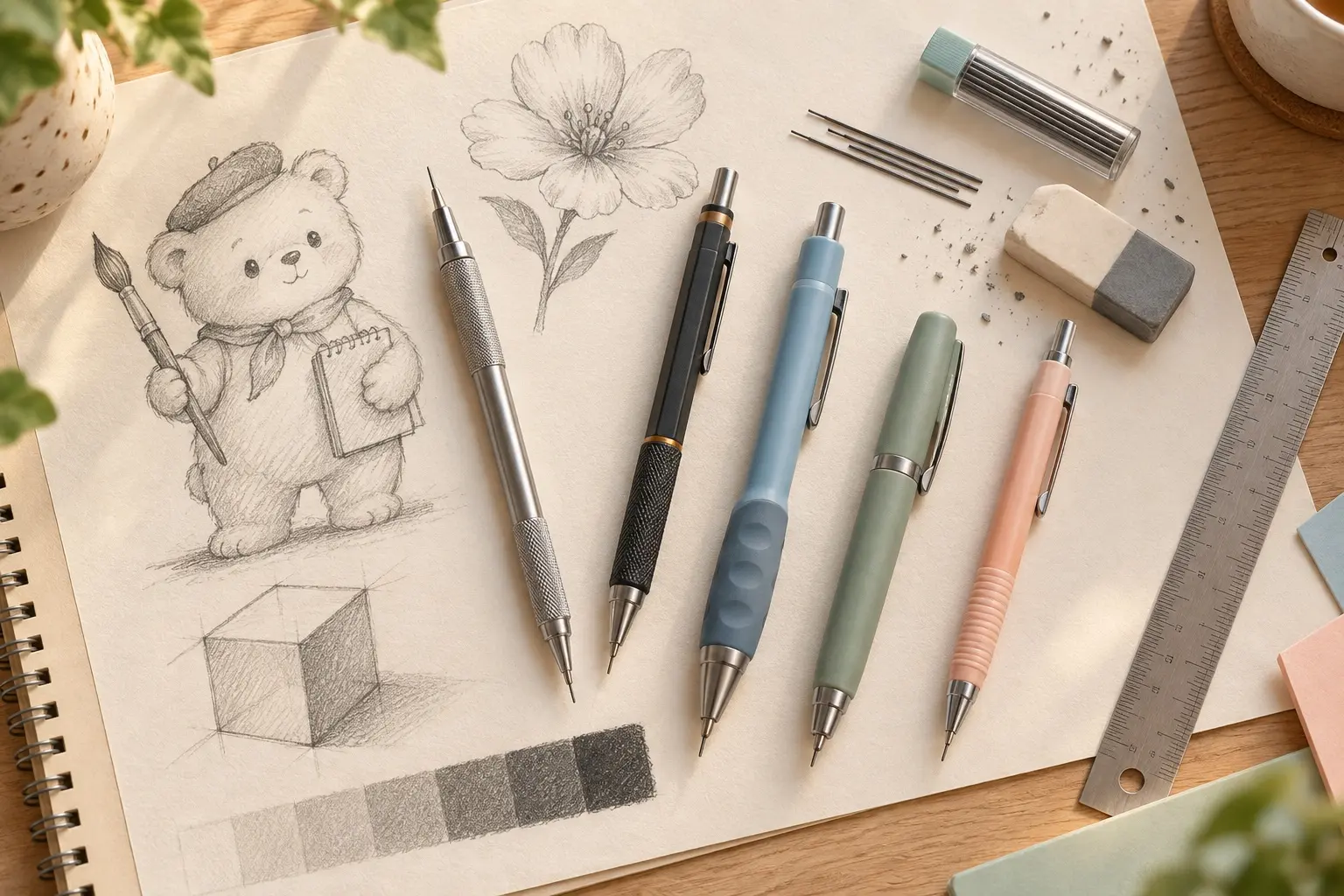
Best Mechanical Pencils for Drawing
Compare 10 research-based mechanical pencils for drawing by lead size, grip, sleeve, advance mechanism, portability and sketching purpose.

Best Charcoal Pencils for Drawing: 10 Picks for Beginners & Shading
The best charcoal pencils for drawing and shading, compared for beginners, portraits, soft gradients, white highlights, woodless coverage and value.


