
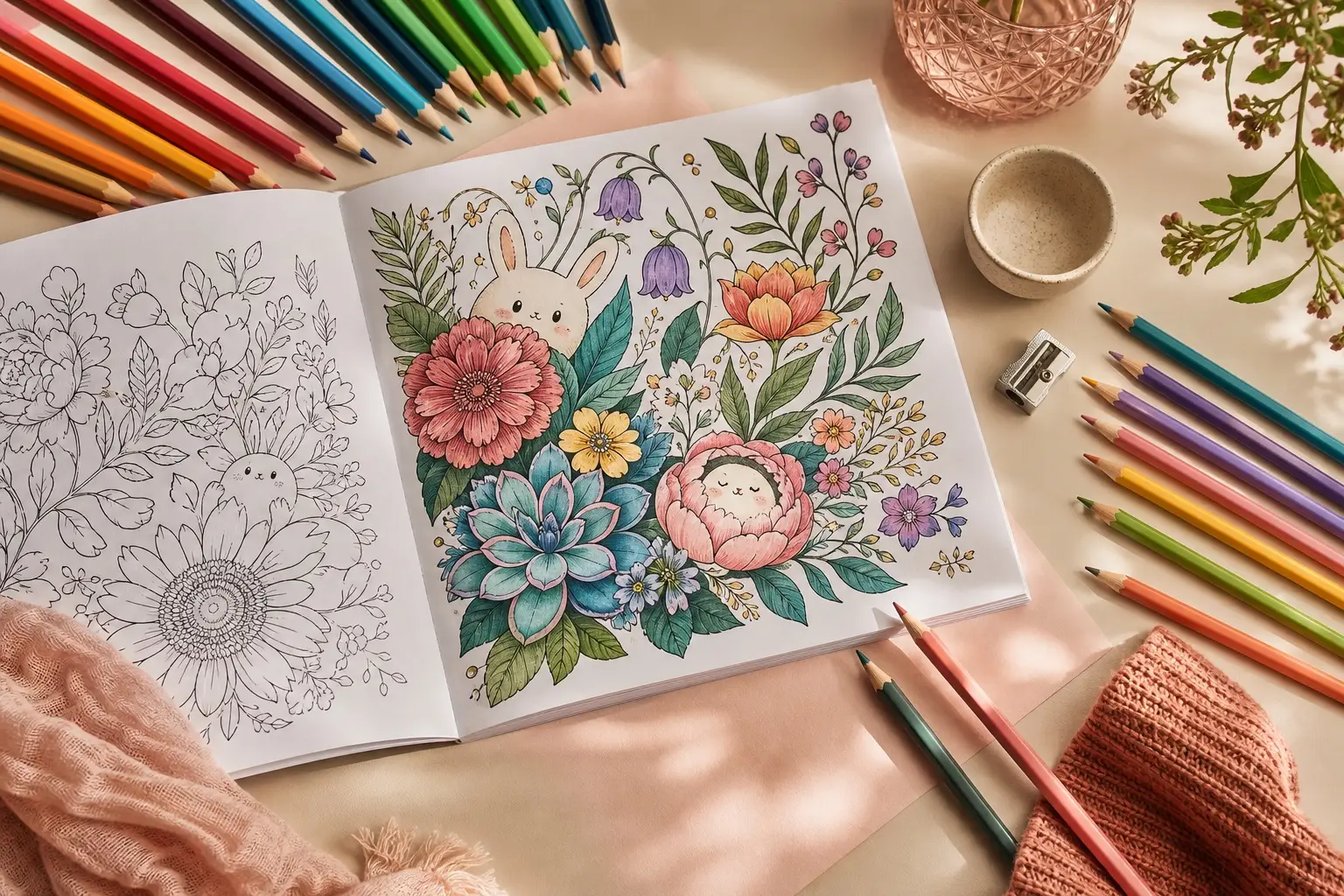
Choose by use case
If you wantMost adult coloring books, especially pages mixing small details with soft gradients

Prismacolor Premier Soft Core Colored Pencils, 72 Count
Best overallResearch-based reviewSeventy-two creamy soft-core colors create an adaptable first serious palette for layering, shading and burnishing
If you wantIntricate botanical, mandala and line-art pages where a controlled point matters

Faber-Castell Polychromos Artists' Color Pencils, 60 Tin
Best for details and layeringResearch-based reviewA firmer 3.8 mm artist core favors clean lines, repeated layers and a point that lasts longer between sharpening sessions
If you wantBeginners who want a broad, organized soft-core palette without professional-range pricing

Castle Art Supplies 72 Colored Pencils
Best value tinResearch-based reviewSeventy-two named colors arrive arranged by family in a presentation tin for an approachable all-in-one start
If you wantLarge florals, backgrounds and colorists who prefer a notably soft, velvety core

Derwent Coloursoft Colored Pencils, 72 Tin
Best for bold coverageResearch-based reviewThe complete 72-color Coloursoft range uses a round 4 mm core designed to build dense color quickly
If you wantFinished pages intended for framing, gifting or display in controlled light

Caran d'Ache Luminance 6901 Colored Pencils, 40
Best lightfast splurgeResearch-based reviewForty creamy Swiss-made pencils pair a 3.8 mm core with manufacturer-documented ASTM D6901 light resistance
If you wantColoring books with black backgrounds, toned paper or dramatic opaque accents

Faber-Castell Black Edition Colored Pencils, 50
Best for dark pagesResearch-based reviewFifty triangular black-wood pencils use highly pigmented super-soft cores intended to show on light, colored and dark paper
If you wantNature pages, soft palettes and colorists who enjoy organized families of related shades

Tombow Irojiten Colored Pencils, 90-Color Three-Set Pack
Best nuanced paletteResearch-based reviewRainforest, Seascape and Woodlands dictionaries divide 90 wax-based colors into pale, vivid and deep families
If you wantColorists who prefer crisp sharpening, deliberate layers and less wax buildup

Koh-I-Noor Polycolor Colored Pencils, 72 Tin
Best firm oil-based valueResearch-based reviewSeventy-two hexagonal cedar pencils use a 3.8 mm oil-and-binder core designed for dense strokes and fine detail
If you wantNew colorists testing soft-core pencils before buying a large collection

Crayola Signature Blend & Shade Colored Pencils, 24
Best compact starterResearch-based reviewTwenty-four highly pigmented soft-core colors arrive in a small decorative tin for a low-clutter start
If you wantBeginners who want 72 pre-sharpened colors, a chart and a protective tin in one box

ARTEZA Colored Pencils, 72 Colors
Best complete beginner setupResearch-based reviewA broad soft-wax palette arrives pre-sharpened with a metal tin and color chart for immediate swatching and organization
Product comparison
| Product | Best for | Watch out | Price & shop |
|---|---|---|---|
| Prismacolor Premier Soft Core Colored Pencils, 72 Count (opens Amazon in a new tab) Best overallResearch-based review | Most adult coloring books, especially pages mixing small details with soft gradients | The soft cores wear down faster than firmer pencils and need a supported point, a sharp blade and lighter pressure to reduce breakage. | |
| Faber-Castell Polychromos Artists' Color Pencils, 60 Tin (opens Amazon in a new tab) Best for details and layeringResearch-based review | Intricate botanical, mandala and line-art pages where a controlled point matters | The firmer feel takes more layers to reach dense coverage, and the premium 60-color tin offers fewer ready-made shades than several less expensive sets. | |
| Castle Art Supplies 72 Colored Pencils (opens Amazon in a new tab) Best value tinResearch-based review | Beginners who want a broad, organized soft-core palette without professional-range pricing | Castle Arts does not offer the same complete open-stock replacement system as the premium artist ranges, so a finished favorite color may be difficult to replace alone. | |
| Derwent Coloursoft Colored Pencils, 72 Tin (opens Amazon in a new tab) Best for bold coverageResearch-based review | Large florals, backgrounds and colorists who prefer a notably soft, velvety core | The large soft core can need frequent sharpening for micro-details, and the full metal tin occupies more room than a compact starter set. | |
| Caran d'Ache Luminance 6901 Colored Pencils, 40 (opens Amazon in a new tab) Best lightfast splurgeResearch-based review | Finished pages intended for framing, gifting or display in controlled light | The 40-color set is far more expensive per pencil than the hobby ranges and gives a beginner fewer neighboring shades without mixing. | |
| Faber-Castell Black Edition Colored Pencils, 50 (opens Amazon in a new tab) Best for dark pagesResearch-based review | Coloring books with black backgrounds, toned paper or dramatic opaque accents | The fold-out cardboard holder is less protective than a metal tin, and the range is not positioned as a color-by-color archival system. | Budget-friendlyCheck price on Amazon (opens Amazon in a new tab) |
| Tombow Irojiten Colored Pencils, 90-Color Three-Set Pack (opens Amazon in a new tab) Best nuanced paletteResearch-based review | Nature pages, soft palettes and colorists who enjoy organized families of related shades | Nine small book-style volumes are slower to scan than one open tray, and the premium cost is difficult to justify for a casual first set. | |
| Koh-I-Noor Polycolor Colored Pencils, 72 Tin (opens Amazon in a new tab) Best firm oil-based valueResearch-based review | Colorists who prefer crisp sharpening, deliberate layers and less wax buildup | A firmer core can feel less immediately satisfying to a colorist who expects dense color from one or two passes. | |
| Crayola Signature Blend & Shade Colored Pencils, 24 (opens Amazon in a new tab) Best compact starterResearch-based review | New colorists testing soft-core pencils before buying a large collection | Twenty-four colors require more mixing and cannot supply the ready-made greys, earth tones and neighboring shades found in larger palettes. | Budget-friendlyCheck price on Amazon (opens Amazon in a new tab) |
| ARTEZA Colored Pencils, 72 Colors (opens Amazon in a new tab) Best complete beginner setupResearch-based review | Beginners who want 72 pre-sharpened colors, a chart and a protective tin in one box | The large three-layer tin is not especially portable, and a favorite pencil cannot be replaced through a complete open-stock range. |
How we researched this guide
- Product listings checked
- Hands-on testing
- None of the 10 picks — all are research-based
- Labels explained
- How we test and label products
This is a research-based buying guide, not a hands-on ranking. On August 29, 2026, we checked the exact Amazon.com detail page, ASIN, current new-offer evidence and matching direct Amazon CDN image for every recommendation. Product construction, color count, core diameter, storage and replacement facts came from current manufacturer pages and the exact Amazon listing. We prioritized smooth-looking laydown, realistic blending and layering potential, point control, a useful coloring-book palette, clear storage and a distinct reason to choose each set. We did not measure pigment load, breakage, sharpening frequency, hand fatigue, blend quality, color accuracy, lightfastness beyond manufacturer documentation or performance on any specific coloring-book paper. Prices, sellers, packaging and availability can change, so recheck the linked detail page before buying.
Testing status by pick
- Prismacolor Premier Soft Core Colored Pencils, 72 CountResearch-based review
- Faber-Castell Polychromos Artists' Color Pencils, 60 TinResearch-based review
- Castle Art Supplies 72 Colored PencilsResearch-based review
- Derwent Coloursoft Colored Pencils, 72 TinResearch-based review
- Caran d'Ache Luminance 6901 Colored Pencils, 40Research-based review
- Faber-Castell Black Edition Colored Pencils, 50Research-based review
- Tombow Irojiten Colored Pencils, 90-Color Three-Set PackResearch-based review
- Koh-I-Noor Polycolor Colored Pencils, 72 TinResearch-based review
- Crayola Signature Blend & Shade Colored Pencils, 24Research-based review
- ARTEZA Colored Pencils, 72 ColorsResearch-based review
Product details and drawbacks
Prismacolor Premier Soft Core Colored Pencils, 72 Count (opens Amazon in a new tab)
Seventy-two creamy soft-core colors create an adaptable first serious palette for layering, shading and burnishing

Why it fits this guide
Prismacolor offers the easiest balance of immediate color, palette breadth and fine-enough control in this research shortlist. The 72-count tin includes useful neutrals and neighboring shades without becoming as difficult to navigate as a very large 120- or 150-color set.
Honest drawback
The soft cores wear down faster than firmer pencils and need a supported point, a sharp blade and lighter pressure to reduce breakage.
Specifications
- Exact Amazon.com ASIN showed current new-offer evidence on August 29, 2026
- 72 assorted soft-core colored pencils in a metal tin
- Manufacturer describes ultra-smooth laydown and cores made for blending and shading
Best forMost adult coloring books, especially pages mixing small details with soft gradients
Pros
- Creamy cores are designed for smooth color and gradual blends
- Seventy-two colors cover most everyday adult-coloring subjects
- Individual Premier colors are widely sold for replacement
Cons
- Soft points can wear quickly
- Large backgrounds still take longer than marker fills
Faber-Castell Polychromos Artists' Color Pencils, 60 Tin (opens Amazon in a new tab)
A firmer 3.8 mm artist core favors clean lines, repeated layers and a point that lasts longer between sharpening sessions

Why it fits this guide
Polychromos is the strongest counterpoint to very soft wax-focused pencils. Faber-Castell documents a 3.8 mm bonded core, water-resistant color and individual availability, making the set useful for colorists who build a page gradually and replace favorite shades.
Honest drawback
The firmer feel takes more layers to reach dense coverage, and the premium 60-color tin offers fewer ready-made shades than several less expensive sets.
Specifications
- Exact Amazon.com ASIN and a current in-stock offer were checked August 29, 2026
- 60 colors in a metal tin with a 3.8 mm bonded lead
- Faber-Castell lists water-resistant, smudge-proof color and individual pencils
Best forIntricate botanical, mandala and line-art pages where a controlled point matters
Pros
- Point control suits intricate pages
- Firmer core supports many light layers
- Open-stock colors simplify replacement
Cons
- Less instantly creamy than the softest sets
- Premium cost for only 60 colors
Castle Art Supplies 72 Colored Pencils (opens Amazon in a new tab)
Seventy-two named colors arrive arranged by family in a presentation tin for an approachable all-in-one start

Why it fits this guide
Castle Arts makes a sensible first upgrade from basic school pencils. The range is large enough for flowers, food, animals and portraits, while the family arrangement and numbered barrels reduce the friction of finding the next shade.
Honest drawback
Castle Arts does not offer the same complete open-stock replacement system as the premium artist ranges, so a finished favorite color may be difficult to replace alone.
Specifications
- Exact Amazon.com ASIN showed an in-stock offer on August 29, 2026
- 72 soft-core colored pencils in a three-layer metal tin
- Colors are named, numbered and arranged in color families
Best forBeginners who want a broad, organized soft-core palette without professional-range pricing
Pros
- Broad 72-color palette at an approachable level
- Tin keeps three color trays together
- Soft-core format is designed for layering and blending
Cons
- No complete individual replacement range
- Three trays need desk space during use
Derwent Coloursoft Colored Pencils, 72 Tin (opens Amazon in a new tab)
The complete 72-color Coloursoft range uses a round 4 mm core designed to build dense color quickly

Why it fits this guide
Derwent explicitly positions Coloursoft around soft texture and fast color building. That makes it a useful choice when a page has broad petals, leaves, clothing or background shapes and slow, scratchy coverage is the main frustration.
Honest drawback
The large soft core can need frequent sharpening for micro-details, and the full metal tin occupies more room than a compact starter set.
Specifications
- Exact Amazon.com ASIN showed a current new offer on August 29, 2026
- Complete 72-color range in a metal tin
- Round 4 mm soft core designed for quick, bold color building
Best forLarge florals, backgrounds and colorists who prefer a notably soft, velvety core
Pros
- Very soft core favors quick coverage
- Full Coloursoft palette in one purchase
- Manufacturer documents blendable color layers
Cons
- Soft core can wear down quickly
- Not the easiest option for keeping a needle-fine point
Caran d'Ache Luminance 6901 Colored Pencils, 40 (opens Amazon in a new tab)
Forty creamy Swiss-made pencils pair a 3.8 mm core with manufacturer-documented ASTM D6901 light resistance

Why it fits this guide
Luminance has a clear purpose beyond luxury packaging. Caran d'Ache documents the permanent creamy core, high pigment concentration, individual color names and ASTM D6901 compliance, which matters when the finished page will leave the book and live on a wall.
Honest drawback
The 40-color set is far more expensive per pencil than the hobby ranges and gives a beginner fewer neighboring shades without mixing.
Specifications
- Exact Amazon.com ASIN showed a current new offer on August 29, 2026
- Product reference 6901.740 with 40 colors
- 3.8 mm permanent core and ASTM D6901 light-resistance standard
Best forFinished pages intended for framing, gifting or display in controlled light
Pros
- Documented light-resistance standard for display work
- Creamy core combines coverage with clean lines
- Open-stock colors are replaceable
Cons
- Luxury price band
- Forty colors require more mixing than larger sets
Faber-Castell Black Edition Colored Pencils, 50 (opens Amazon in a new tab)
Fifty triangular black-wood pencils use highly pigmented super-soft cores intended to show on light, colored and dark paper

Why it fits this guide
Black Edition solves a specific page-style problem without demanding professional-pencil prices. The soft, bright colors and triangular barrels make sense for colorists who alternate between ordinary white paper and black-background books.
Honest drawback
The fold-out cardboard holder is less protective than a metal tin, and the range is not positioned as a color-by-color archival system.
Specifications
- Exact Amazon.com ASIN showed an in-stock offer on August 29, 2026
- 50 triangular black-wood pencils in a fold-out holder
- Faber-Castell USA age guidance begins at 13
Best forColoring books with black backgrounds, toned paper or dramatic opaque accents
Pros
- Colors are intended for light and dark paper
- Triangular barrels stay put on the table
- Fold-out package keeps colors visible
Cons
- Cardboard holder offers limited drop protection
- No complete archival or open-stock system
Tombow Irojiten Colored Pencils, 90-Color Three-Set Pack (opens Amazon in a new tab)
Rainforest, Seascape and Woodlands dictionaries divide 90 wax-based colors into pale, vivid and deep families

Why it fits this guide
Irojiten is more thoughtfully organized than a random giant assortment. The three themed sets support natural subjects and subtle transitions, while individually sold pencils make the collection maintainable after favorite greens, blues and neutrals run short.
Honest drawback
Nine small book-style volumes are slower to scan than one open tray, and the premium cost is difficult to justify for a casual first set.
Specifications
- Exact Amazon.com ASIN showed an in-stock offer on August 29, 2026
- 90 pencils across Rainforest, Seascape and Woodlands sets
- Medium wax-based cores with individual replacement colors
Best forNature pages, soft palettes and colorists who enjoy organized families of related shades
Pros
- Nuanced natural and transitional colors
- Medium core supports layering and detail
- Open-stock replacement is available
Cons
- Multi-volume storage slows color selection
- Premium price for a specialized palette
Koh-I-Noor Polycolor Colored Pencils, 72 Tin (opens Amazon in a new tab)
Seventy-two hexagonal cedar pencils use a 3.8 mm oil-and-binder core designed for dense strokes and fine detail

Why it fits this guide
Polycolor offers a firmer alternative without moving all the way to the highest luxury tier. The complete 72-color range, hexagonal barrel and manufacturer-documented oil-and-binder formulation suit detailed pages built from many lighter layers.
Honest drawback
A firmer core can feel less immediately satisfying to a colorist who expects dense color from one or two passes.
Specifications
- Exact Amazon.com ASIN showed a current new offer on August 29, 2026
- Complete 72-color set FA3827 in a metal tin
- Hexagonal cedar barrels with a 3.8 mm oil-and-binder core
Best forColorists who prefer crisp sharpening, deliberate layers and less wax buildup
Pros
- Firm core sharpens for small details
- Seventy-two colors cover the complete range
- Hexagonal barrels resist rolling
Cons
- Needs more layering than very soft pencils
- Premium price for casual coloring
Crayola Signature Blend & Shade Colored Pencils, 24 (opens Amazon in a new tab)
Twenty-four highly pigmented soft-core colors arrive in a small decorative tin for a low-clutter start

Why it fits this guide
Crayola Signature keeps the decision simple. The 24 colors cover basic blending and shading practice, the dark barrels have color-dipped ends, and the whole set can stay beside one book instead of taking over a desk.
Honest drawback
Twenty-four colors require more mixing and cannot supply the ready-made greys, earth tones and neighboring shades found in larger palettes.
Specifications
- Exact Amazon.com ASIN had current new seller offers on August 29, 2026
- 24 soft-core pencils in a decorative storage tin
- Crayola USA recommends the set for ages 9+
Best forNew colorists testing soft-core pencils before buying a large collection
Pros
- Small palette is easy to learn and store
- Soft cores are intended for blending and shading
- Colors are designed for light and dark paper
Cons
- Only 24 colors
- No individual replacement range
ARTEZA Colored Pencils, 72 Colors (opens Amazon in a new tab)
A broad soft-wax palette arrives pre-sharpened with a metal tin and color chart for immediate swatching and organization

Why it fits this guide
ARTEZA packages the useful first-session extras together. A beginner can make a chart, return each pencil to its tray and explore neighboring shades without buying storage or a swatch aid separately.
Honest drawback
The large three-layer tin is not especially portable, and a favorite pencil cannot be replaced through a complete open-stock range.
Specifications
- Exact Amazon.com ASIN showed an in-stock offer on August 29, 2026
- 72 pre-sharpened pencils with 4 mm soft-wax cores
- Metal tin and color chart included
Best forBeginners who want 72 pre-sharpened colors, a chart and a protective tin in one box
Pros
- Broad ready-to-use palette
- Color chart encourages organized swatching
- Tin protects the pencils between sessions
Cons
- No complete open-stock replacement system
- Three layers need room on the table
Corrections
Spotted an error or outdated detail? Read how we handle corrections.
Related guides
Best Coloring Supplies for Adults
The best coloring supplies for adults, including markers, colored pencils, gel pens, fineliners, and watercolor pencils for different papers and styles.
Best Markers for Coloring Books
The best markers for coloring books, from washable sets to dual-tip and alcohol markers. Compare tip control, bleed risk, and the best use for each.
Best Pencil Sharpeners for Artists
Compare the best pencil sharpeners for artists, including long-point, crank, adjustable and electric picks for graphite, charcoal and drawing pencils.
Best Alcohol Markers for Coloring Books: 10 Sets for Smooth Blending
The best alcohol markers for coloring books, from brush-tip starter sets to refillable Copic options. Compare tips, colors, blending, and bleed-through.


