Choose by use case
If you wantTeens who like cozy everyday scenes, reading corners and self-directed quiet projects

Coco Wyo Girl Moments Coloring Book
Best overallResearch-based reviewForty hand-drawn single-sided scenes turn warm drinks, reading and familiar routines into approachable square coloring projects
If you wantTeens who enjoy expressive anime-inspired characters, fantasy creatures and patterned backgrounds

Best of Pop Manga Coloring Book
Best for manga fansResearch-based reviewAn eighty-page compilation combines mermaids, dragons, curious creatures and anime-inspired figures in Camilla d'Errico's Pop Surrealism style
If you wantTeens who want a portable book with motifs that can be completed one at a time

Johanna Basford Small Victories Coloring Book
Best for short sessionsResearch-based reviewAn eighty-page 6-by-8-inch book uses individual drawings, vignettes and miniature compositions to make completion feel manageable
If you wantTeens who like ghosts, odd creatures and cozy dark palettes without graphic horror

Coco Wyo Spooky Cutie Coloring Book
Best cute-spooky pickResearch-based reviewForty single-sided square pages combine bold outlines, peculiar creatures and comfortable hygge scenes on disclosed 80–90 gsm Amazon paper
If you wantPatient teen artists who want cryptids, sprites, elemental figures and elaborate forest compositions

Mythographic Color and Discover: Fairy Folklore
Best detailed fantasyResearch-based reviewMore than forty-five hand-drawn fantasy illustrations fill a large 96-page square book intended for pencils, gel pens and other detail tools
If you wantTeens who prefer inventing contours, figures and doodles to filling predetermined outlines

The Reverse Coloring Book: The Book Has the Colors, You Draw the Lines!
Best creative twistResearch-based reviewFifty original watercolor prompts provide the colors first, leaving the artist to add lines, shapes, dots and imagined subjects
Product comparison
| Product | Best for | Watch out | Price & shop |
|---|---|---|---|
| Coco Wyo Girl Moments Coloring Book (opens Amazon in a new tab) Best overallResearch-based review | Teens who like cozy everyday scenes, reading corners and self-directed quiet projects | The human-centered cozy aesthetic is intentionally specific, and the exact product page does not publish a paper-weight figure | Budget-friendlyCheck price on Amazon (opens Amazon in a new tab) |
| Best of Pop Manga Coloring Book (opens Amazon in a new tab) Best for manga fansResearch-based review | Teens who enjoy expressive anime-inspired characters, fantasy creatures and patterned backgrounds | The large detailed pages ask for more time and point control than a bold cozy book, and the compilation may repeat artwork owned in earlier Pop Manga volumes | |
| Johanna Basford Small Victories Coloring Book (opens Amazon in a new tab) Best for short sessionsResearch-based review | Teens who want a portable book with motifs that can be completed one at a time | The small page size limits sweeping backgrounds and broad marker work, while the publisher does not state paper weight or surface tooth | |
| Coco Wyo Spooky Cutie Coloring Book (opens Amazon in a new tab) Best cute-spooky pickResearch-based review | Teens who like ghosts, odd creatures and cozy dark palettes without graphic horror | The theme may feel seasonal, and the ordinary 80–90 gsm glue-bound paper offers less tolerance for liquid or hard erasing than artist paper | Budget-friendlyCheck price on Amazon (opens Amazon in a new tab) |
| Mythographic Color and Discover: Fairy Folklore (opens Amazon in a new tab) Best detailed fantasyResearch-based review | Patient teen artists who want cryptids, sprites, elemental figures and elaborate forest compositions | Dense compositions require long sessions and frequent sharpening, and the exact US edition does not publish a paper-weight figure | |
| The Reverse Coloring Book: The Book Has the Colors, You Draw the Lines! (opens Amazon in a new tab) Best creative twistResearch-based review | Teens who prefer inventing contours, figures and doodles to filling predetermined outlines | Open-ended watercolor washes require more drawing decisions than ordinary coloring pages, and the publisher does not state an exact gsm figure | Budget-friendlyCheck price on Amazon (opens Amazon in a new tab) |
How we researched this guide
- Product listings checked
- Hands-on testing
- None of the 6 picks — all are research-based
- Labels explained
- How we test and label products
This is a research-based buying guide, not a hands-on paper, print or coloring test. On September 25, 2026, we opened each exact Amazon.com detail page in a US delivery context, confirmed the ASIN or ISBN-derived ASIN, an in-stock offer sold by Amazon.com with add-to-cart and buy-now controls, and the matching direct Amazon CDN cover image. We cross-checked illustration count, theme, trim size, page construction and paper disclosures against current Coco Wyo, Penguin Random House, Macmillan and Hachette/Workman pages. KawaiiToons has not colored in these copies or measured paper weight, marker bleed, show-through, print sharpness, binding durability, line density or page-removal strength. Rankings reflect documented formats and meaningful creative differences, not customer ratings, temporary prices or invented teen approval.
Testing status by pick
- Coco Wyo Girl Moments Coloring BookResearch-based review
- Best of Pop Manga Coloring BookResearch-based review
- Johanna Basford Small Victories Coloring BookResearch-based review
- Coco Wyo Spooky Cutie Coloring BookResearch-based review
- Mythographic Color and Discover: Fairy FolkloreResearch-based review
- The Reverse Coloring Book: The Book Has the Colors, You Draw the Lines!Research-based review
Product details and drawbacks
Coco Wyo Girl Moments Coloring Book (opens Amazon in a new tab)
Forty hand-drawn single-sided scenes turn warm drinks, reading and familiar routines into approachable square coloring projects

Why it fits this guide
Girl Moments is the most direct match for this guide. The exact Amazon title explicitly names adults and teens, and Coco Wyo documents forty hand-drawn pages built around calm daily activities such as reading and enjoying a warm drink. The 8.5-inch-square format is easy to support on a desk or lap board, while clothing, mugs, blankets and room accents leave enough choice for personal palettes without demanding realistic portrait technique. Single-sided printing protects artwork on the back, but it does not make the next sheet marker-proof.
Honest drawback
The human-centered cozy aesthetic is intentionally specific, and the exact product page does not publish a paper-weight figure
Specifications
- Exact Amazon ASIN B0DL5SF36B was in stock, sold by Amazon.com and showed add-to-cart and buy-now controls on September 25, 2026
- Forty hand-drawn coloring designs in an 8.5-by-8.5-inch format
- Publisher documents single-sided pages and familiar everyday scenes
Best forTeens who like cozy everyday scenes, reading corners and self-directed quiet projects
Pros
- Exact edition is explicitly presented for adults and teens
- Relatable scenes make palette planning easy to imagine
- Bold square artwork is approachable without looking preschool-oriented
Cons
- Cozy girlhood theme will not fit every teen
- Exact paper weight and perforation are not documented
Best of Pop Manga Coloring Book (opens Amazon in a new tab)
An eighty-page compilation combines mermaids, dragons, curious creatures and anime-inspired figures in Camilla d'Errico's Pop Surrealism style

Why it fits this guide
Best of Pop Manga feels like an art-book project rather than a generic activity book. Penguin Random House documents an eighty-page collection drawn from four earlier Camilla d'Errico coloring books, with mermaids, dragons, creatures and anime-inspired characters alongside selected patterned backgrounds. The nearly 10-inch-square trim gives expressive faces and fantasy details room to breathe. The publisher describes the paper as non-bleed, but it does not publish a gsm figure or promise compatibility with every alcohol marker, so a protective sheet is still the sensible default.
Honest drawback
The large detailed pages ask for more time and point control than a bold cozy book, and the compilation may repeat artwork owned in earlier Pop Manga volumes
Specifications
- Exact Amazon ASIN 1984862766 was in stock, sold by Amazon.com and showed add-to-cart and buy-now controls on September 25, 2026
- Eighty-page Watson-Guptill paperback with ISBN 9781984862761
- Publisher documents an approximately 9.8-inch-square format and black-and-white artwork on paper it describes as non-bleed
Best forTeens who enjoy expressive anime-inspired characters, fantasy creatures and patterned backgrounds
Pros
- Distinctive manga and Pop Surrealism visual language
- Broad fantasy mix avoids locking the book to one creature or setting
- Large square pages leave room for detailed pencil work
Cons
- More demanding than a bold-and-easy book
- Exact paper weight and marker limits are not published
Johanna Basford Small Victories Coloring Book (opens Amazon in a new tab)
An eighty-page 6-by-8-inch book uses individual drawings, vignettes and miniature compositions to make completion feel manageable

Why it fits this guide
Small Victories solves the time problem rather than simplifying every line. Penguin Random House describes pages of individual drawings, vignettes and small motifs designed to be completed in a sitting. A teen can color one flower, animal or tiny fantasy detail and stop without abandoning a large background. The compact 6-by-8-inch trim travels easily and fits a smaller desk, but it also reduces room for broad gradients and can make intricate motifs feel tighter than they would in a full-size book.
Honest drawback
The small page size limits sweeping backgrounds and broad marker work, while the publisher does not state paper weight or surface tooth
Specifications
- Exact Amazon ASIN 0143137859 was in stock, sold by Amazon.com and showed add-to-cart and buy-now controls on September 25, 2026
- Eighty-page Penguin Life edition with ISBN 9780143137856
- Publisher documents a compact 6-by-8-inch format with little drawings, vignettes and smaller motifs
Best forTeens who want a portable book with motifs that can be completed one at a time
Pros
- Individual motifs support genuinely short sessions
- Compact format is easy to carry and store
- Whimsical subjects offer variety without requiring a full-page commitment
Cons
- Less space for large gradients and broad tips
- Paper weight and tooth are not published
Coco Wyo Spooky Cutie Coloring Book (opens Amazon in a new tab)
Forty single-sided square pages combine bold outlines, peculiar creatures and comfortable hygge scenes on disclosed 80–90 gsm Amazon paper

Why it fits this guide
Spooky Cutie is proof that simple artwork does not have to feel aimed at very young children. Coco Wyo documents forty hand-drawn 8.5-inch-square pages featuring mystical, strange and adorable creatures in cozy settings. Heavy outlines and open shapes make flat marker fills or basic pencil gradients approachable, while the theme supports autumn colors, candy palettes or moody neutrals. Coco Wyo also states that its Amazon-printed paper is approximately 80–90 gsm, a useful warning to protect the next sheet and avoid heavy wet layering.
Honest drawback
The theme may feel seasonal, and the ordinary 80–90 gsm glue-bound paper offers less tolerance for liquid or hard erasing than artist paper
Specifications
- Exact Amazon ASIN B0D943SQXV was in stock, sold by Amazon.com and showed add-to-cart and buy-now controls on September 25, 2026
- Forty hand-drawn single-sided designs in an 8.5-by-8.5-inch format
- Coco Wyo states that the Amazon paperback uses approximately 80–90 gsm paper
Best forTeens who like ghosts, odd creatures and cozy dark palettes without graphic horror
Pros
- Cute-creepy subject feels distinct without graphic content
- Bold shapes are friendly to beginners and broad tips
- Publisher discloses approximate paper weight
Cons
- Halloween-adjacent mood will not appeal to everyone
- Pages are not perforated and require protection with markers
Mythographic Color and Discover: Fairy Folklore (opens Amazon in a new tab)
More than forty-five hand-drawn fantasy illustrations fill a large 96-page square book intended for pencils, gel pens and other detail tools

Why it fits this guide
Fairy Folklore is the deliberate high-detail choice. Macmillan documents more than forty-five hand-drawn illustrations of sprites, gnomes, cryptids, fantastical fauna and elemental figures in a 96-page, approximately 9.8-inch-square book. The scale gives a skilled teen room to build layered palettes and small accents, but the compositions still demand a sharp point, planning and patience. It belongs in this list for teens who already enjoy intricate fantasy art—not as the default book for someone who wants quick, low-decision pages.
Honest drawback
Dense compositions require long sessions and frequent sharpening, and the exact US edition does not publish a paper-weight figure
Specifications
- Exact Amazon ASIN 1250421454 was in stock, sold by Amazon.com and showed add-to-cart and buy-now controls on September 25, 2026
- More than forty-five hand-drawn fantasy illustrations across ninety-six pages
- Macmillan documents an approximately 9.8-inch-square US edition and names colored pencils, gels and glitter as intended media
Best forPatient teen artists who want cryptids, sprites, elemental figures and elaborate forest compositions
Pros
- Most intricate fantasy art in the shortlist
- Large pages support layered color and small accents
- Varied sprites, cryptids and environments reward imaginative palettes
Cons
- Highest time and precision demand here
- Exact paper weight for the US edition is not published
The Reverse Coloring Book: The Book Has the Colors, You Draw the Lines! (opens Amazon in a new tab)
Fifty original watercolor prompts provide the colors first, leaving the artist to add lines, shapes, dots and imagined subjects

Why it fits this guide
The Reverse Coloring Book changes the task completely. Kendra Norton's fifty unfinished watercolor artworks arrive with no fixed line drawing; the teen decides whether to trace color edges, invent creatures, add repeated patterns or leave part of the wash untouched. Workman documents sturdy, single-sided perforated pages in a large 8.5-by-11-inch format, so sheets can be rotated or removed while drawing. That freedom makes it the most creative option here, but it can also create more hesitation than a conventional page with obvious boundaries.
Honest drawback
Open-ended watercolor washes require more drawing decisions than ordinary coloring pages, and the publisher does not state an exact gsm figure
Specifications
- Exact Amazon ASIN 1523515279 was in stock, sold by Amazon.com and showed add-to-cart and buy-now controls on September 25, 2026
- Fifty original watercolor artworks in a 104-page, 8.5-by-11-inch paperback
- Workman documents sturdy single-sided perforated pages
Best forTeens who prefer inventing contours, figures and doodles to filling predetermined outlines
Pros
- Most open-ended and drawing-friendly format
- Perforated pages can be removed and rotated
- Mixed watercolor prompts support many doodling styles
Cons
- Less structure for anyone who wants clear outlines
- Exact paper weight is not published
Corrections
Spotted an error or outdated detail? Read how we handle corrections.
Related guides
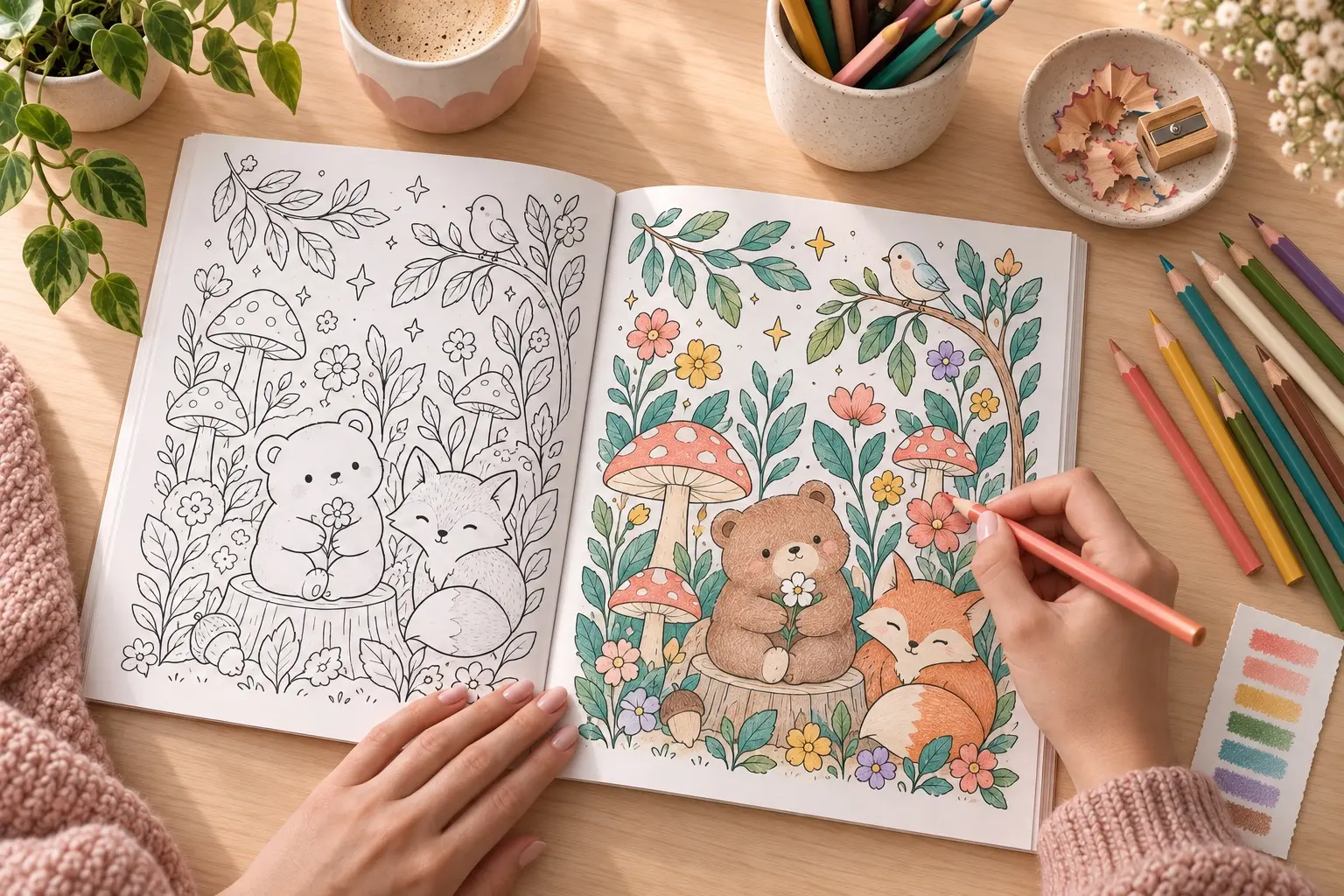
Best Coloring Books for Colored Pencils
Six research-based coloring books for colored pencils, compared by paper tooth, page format, binding, artwork detail and room for layered shading.
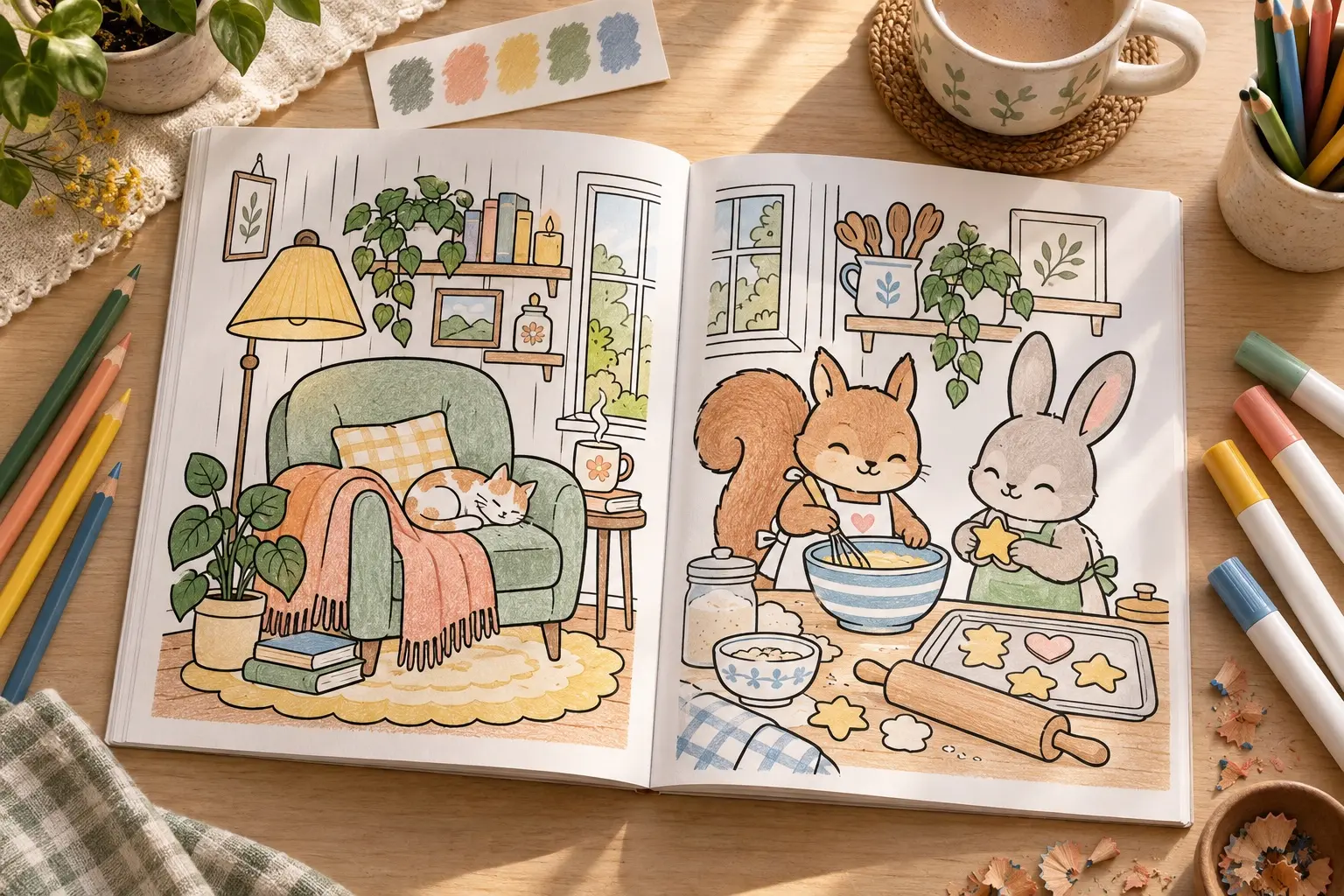
Best Cozy, Bold and Easy Coloring Books
Six research-based cozy, bold and easy coloring books compared by subject, page count, format, paper disclosure and marker practicality.
Best Reverse Coloring Books
Five research-based reverse coloring books compared by artwork style, prompt count, page format, paper disclosure and creative freedom.
Best Water-Based Markers for Coloring Books
The best water-based markers for coloring books, including low-bleed dual-tip, brush and fineliner picks. Compare tips, colors and paper use.


